Protect the purchase
Keep event information, ticket confidence and checkout clarity at the centre of the product.
12 November 2024
A mobile festival companion that brings discovery, ticketing and event-based community into one considered journey. FestGo was created as a Master's project to explore how digital products can help people arrive informed and feel less alone.
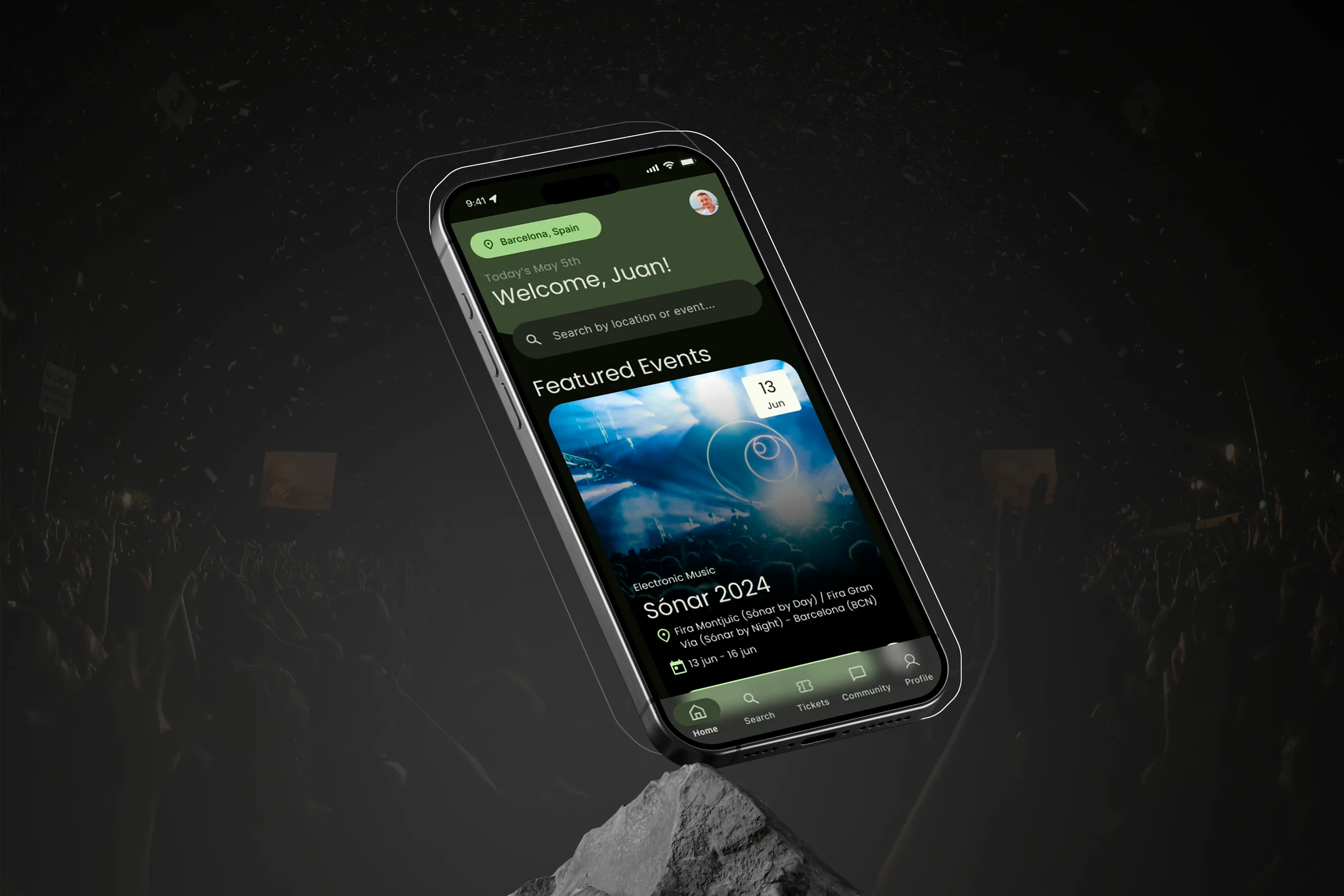
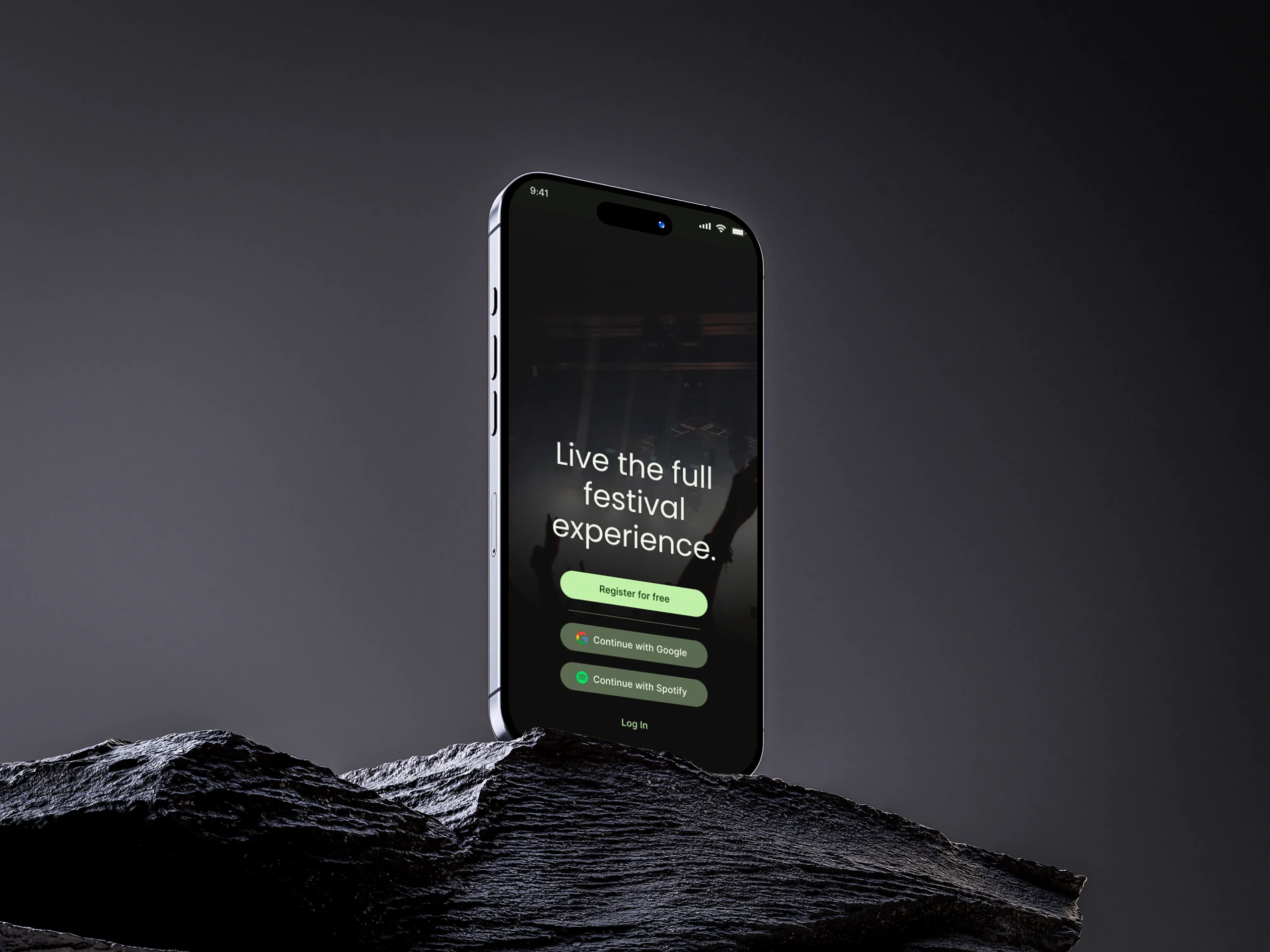
FestGo is a complete festival companion spanning music-led discovery, ticket purchase, preparation and arrival. Users can organise access, then opt into temporary communities anchored to the event they are attending.
Design a trustworthy mobile experience that makes event discovery and checkout effortless while offering a safe, purposeful way to coordinate with other attendees—without turning the product into an open-ended social network.
Ticket apps usually stop at the transaction, while broad social platforms lack the shared context and safeguards an event requires. FestGo needed to connect these behaviours without making meeting new people feel compulsory, exposed or distracting at checkout.
Design questionHow might a ticket become the beginning of a shared experience while keeping every social interaction optional, relevant and safe?
Keep event information, ticket confidence and checkout clarity at the centre of the product.
Anchor groups and conversations to a real event, shared interest and limited time window.
Let people control visibility, invitations and when they move from browsing to participation.
The research phase compared ticket marketplaces, festival companion apps and interest-based communities. A consistent gap emerged between logistical confidence and social confidence: users could buy access, but still lacked a low-pressure way to plan the experience with others.
Music preference creates immediate discovery value before the product asks for social participation.
A verified ticket and a specific festival make a community feel more purposeful than an open local group.
Social tools become useful after intent exists and should recede once the event has passed.
The scan focuses on product patterns and trust signals across adjacent categories; it informs the concept rather than claiming comparative business performance.
Scroll horizontally to compare →
| Product | Discovery | Ticket journey | Event utility | Community model |
|---|---|---|---|---|
| Ticket marketplaces | Inventory-led | Highly optimised | Basic wallet | Not core |
| Festival apps | Single-event | External purchase | Strong schedules | Announcements |
| Social event platforms | Interest-led | Varies | Conversation-first | Open groups |
| FestGo direction | Taste + location | Native and clear | Ticket to timetable | Event-bound circles |
The independent festival-goer
Lucía follows artists closely and is comfortable buying tickets alone when friends cannot commit. The uncertainty begins later: travel, set choices and whether she will know anyone when she arrives.
I will go for the music either way. It would just be easier if meeting people felt connected to the event, not like joining a dating app.
The journey is organised into five moments: preference, discovery, decision, preparation and attendance. This keeps community features away from checkout and gives each interaction a clear reason to exist.
Choose genres, artists and a useful travel radius.
Browse relevant events with date, venue and availability upfront.
Review the line-up and purchase a ticket with transparent totals.
Opt into the verified attendee circle after the ticket is stored.
Build a plan, share meeting points and keep the ticket close.
Groups belong to one event and a defined time frame, keeping conversation useful and reducing social noise.
Ticket ownership can unlock attendee spaces while privacy controls still determine individual visibility.
Home, search and tickets precede community in the navigation, reinforcing the app's practical value.
Onboarding requests music preferences and location context, not an extensive social profile.
The UI balances an atmospheric, image-rich festival aesthetic with the restraint required for tickets and safety decisions. A consistent card system carries discovery, line-ups, groups and passes while state changes stay recognisable through colour and labels.
A dark interface echoes the atmosphere of a live venue while soft greens signal availability, confirmation and connection. Poppins provides a friendly geometric voice with enough range for expressive campaign moments and compact transactional detail.
Dark surfaces and full-bleed photography build anticipation without reducing transactional clarity.
The accent marks selection, availability, successful purchase and trusted participation.
Cards expose date, place and genre first; line-up, policies and community context follow on demand.
Join, leave, report and visibility actions avoid playful ambiguity when trust is involved.
Use music taste to create immediate relevance without requiring unnecessary profile data.
A visual genre picker creates useful recommendations in a few taps; deeper profile choices remain optional.
Balance ticket, line-up, schedule and social tools inside one clear event context.
A stable event summary leads into distinct ticket, schedule and attendee actions.
Make attendee connection optional, trustworthy and relevant to confirmed event intent.
The attendee circle becomes available once a ticket is stored and includes clear visibility choices.
Prototype validation focused on the points where trust could break: understanding the total ticket cost, distinguishing public event information from attendee-only spaces and changing social visibility without losing access to practical tools.
Task-based walkthroughs covered event discovery, checkout, ticket retrieval, joining a circle and leaving or reporting a conversation. Findings were used as design inputs rather than presented as launch analytics.
Genre relevance was clear, but users needed date and travel context before opening a card.
Promote date, distance and availability into the discovery card's first information layer.
The word community felt broad until ticket verification and event scope were explained.
Rename the entry point as the attendee circle and show its duration, size and access rule.
Social notifications could distract from the time-critical pass.
Give the ticket wallet a dedicated destination and surface the active pass before messages.
The final concept moves from expressive discovery to dependable utility without changing visual language. Each core screen has one dominant decision, while the attendee circle extends the festival experience only when the user chooses it.
A fast visual selector turns music preference into relevant recommendations with minimal personal data.
Line-up, date, venue, ticket state and total cost create a complete decision surface.
Verified attendee spaces support planning while clear controls keep participation voluntary.
Tickets, saved events and essential coordination remain reachable when time and attention are limited.
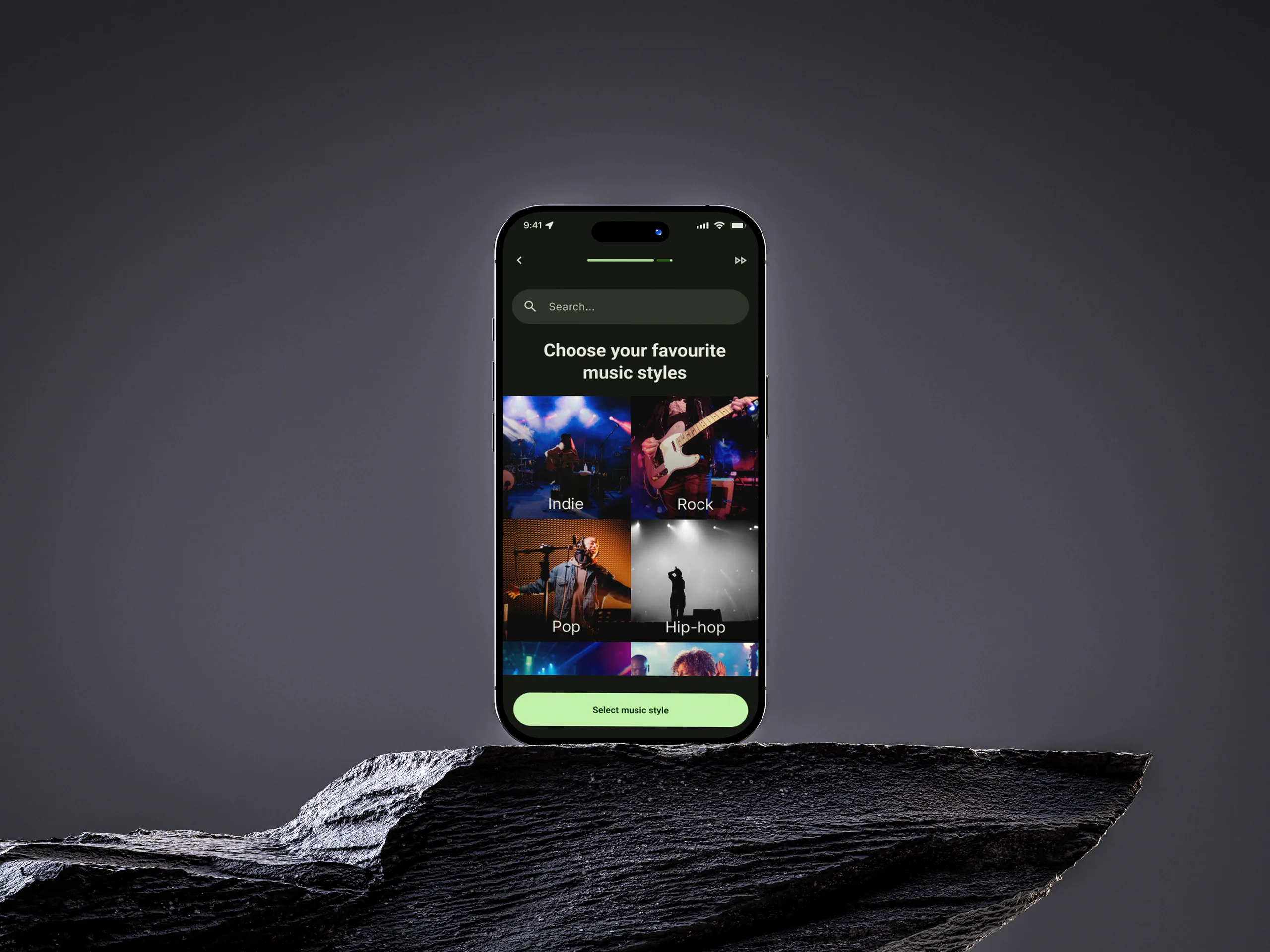
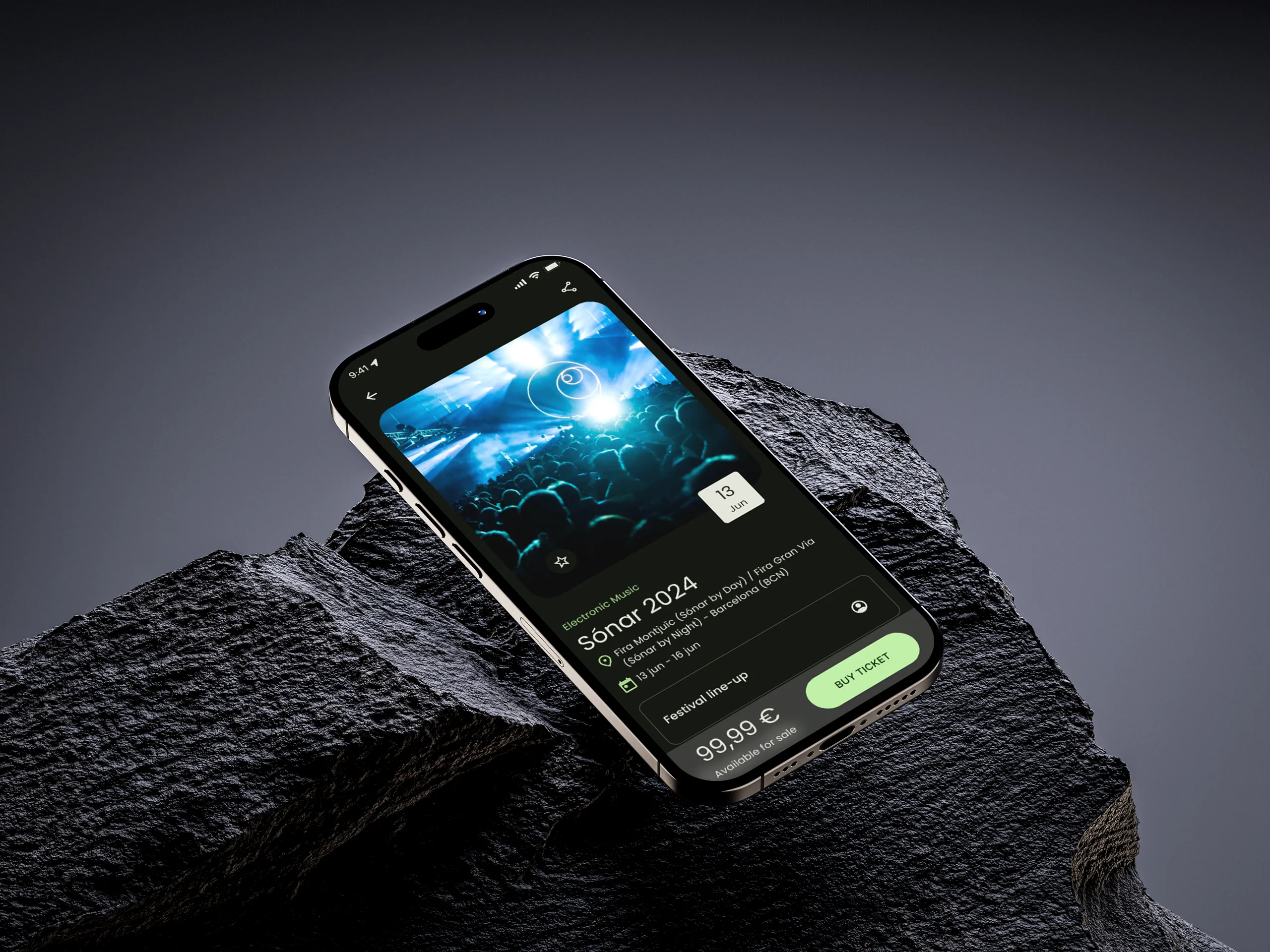
High-fidelity mobile mockups covering the home feed, low-friction registration, preference onboarding and a ticket-ready event detail experience.
FestGo demonstrates how a transactional product can introduce community without sacrificing clarity or consent. The outcome is a coherent concept system whose value starts before the event and remains useful through arrival.
Discovery, purchase, ticket access and attendee coordination share one mobile product model.
Event context, verified attendance and personal visibility controls shape community access.
Home, search, tickets, community and profile keep the app's information architecture compact.
Community features work best when they grow from a shared purpose. In FestGo, the event is not content around the social layer—it is the reason that layer can feel relevant and trustworthy.
A specific event and time frame make participation easier to understand and simpler to leave.
Visibility, reporting and consent cannot be settings discovered after a user has already joined.
A dependable ticket and planning experience builds the confidence required for optional community features.